Welcome to the Multisectoral Coordination Commission
Our commitment is to the People of Guinea-Bissau Because together we can
WHO WE ARE
A Comissão de Coordenação Multissectorial (CCM) da Guiné-Bissau é uma parceria multissectorial de nível nacional estabelecida em 2003 para coordenar e facilitar as atividades relacionadas aos programas financiados pelo Fundo Mundial na Guiné-Bissau.
A missão da CCM da Guiné-Bissau é mobilizar recursos junto ao Fundo Mundial para o controlo do VIH e SIDA, da Tuberculose e do Paludismo. De igual modo, faz parte de sua missão supervisionar e apoiar a implementação dos programas financiados pelo Fundo Mundial.
A missão da CCM da Guiné-Bissau é mobilizar recursos junto ao Fundo Mundial para o controlo do VIH e SIDA, da Tuberculose e do Paludismo. De igual modo, faz parte de sua missão supervisionar e apoiar a implementação dos programas financiados pelo Fundo Mundial.
WHAT WE DO
GRANT GC#7 (2024-2026)

HIV/AIDS
Investment approved for the 2024-2026 grant – GC#7 21,227,603 USD
TUBERCULOSIS
Investment approved for the 2024-2026 grant – GC#7 6,129,088 USD
MALARIA
Approved investment for the 2024-2026 grant – GC#7 29,581,210 USD
CCM - Global Fund
Strategic Oversight Committee (SEC)
The documents for consultation regarding the CSE are available here and at the CCM secretariat.
Cursos Abertos
OpenWHO
OpenWHO is an innovative online learning platform developed by the World Health Organization (WHO) to address a wide range of public health topics.
Learn More
The Global Fund iLearn
The Global Fund offers online learning and other training resources for its staff and partners, applicants, and others interested in learning about our funding model, grantmaking, and access to funding.
Learn More
Global Health Training Centre
The eLearning courses are designed to cover all the steps, processes and issues that are necessary to understand in order to conduct high-quality research. Each course is written to be globally applicable, for all diseases and all regions. Each course is carefully researched to provide high-quality material that is peer-reviewed and regularly updated. A certificate is issued when a minimum of 80% is achieved on the course quizzes.
Learn More
TRREE: Training and Resources for Research Ethics Review
TRREE provides basic training, building capacity on ethics in health research, particularly research involving human subjects, so that research is conducted with the highest ethical standards and promotes the well-being of participants. TRREE offers free and open access to: e-Learning: a distance learning and certification program on ethical review practices in research e-Resources: a participatory website with educational materials on international, regional and national regulations and policies TRREE’s educational materials are currently available in English [EN], French [FR], German [DE] and Portuguese [PORT].
Learn MoreSEMINARS
This webinar will examine the critical challenges faced in the diagnosis and treatment of congenital malformations in sub-Saharan Africa. Experts will discuss the limitations of existing diagnostic facilities, the urgent need for specialist care and potential solutions.
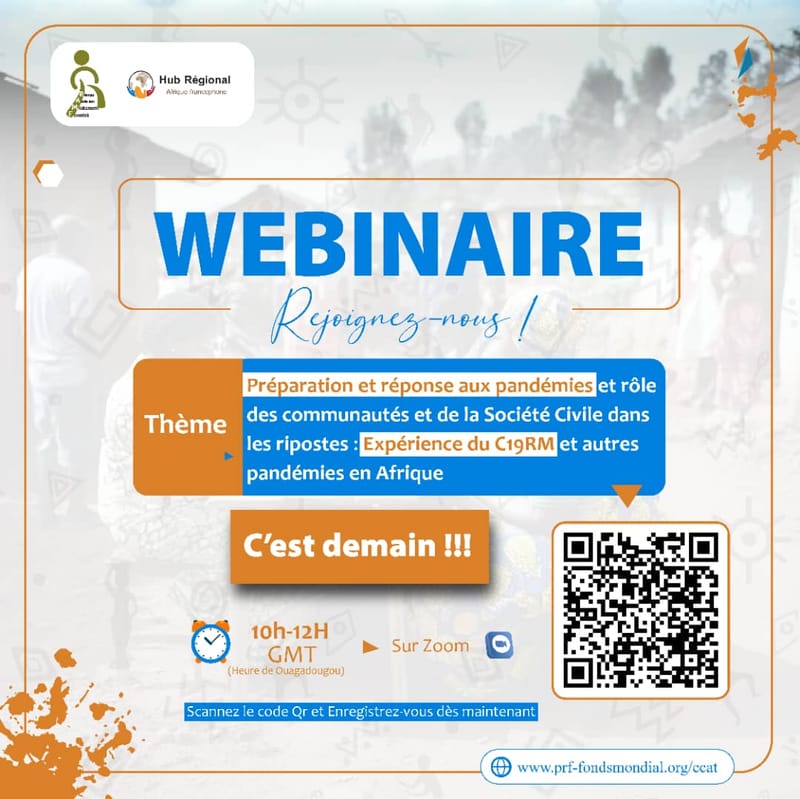
The main objective of this webinar is to share the Global Fund's technical guidance on pandemic preparedness and response (PPR), particularly in the context of the end of C19RM, and to provide a platform for communities and civil society to discuss the role of CS in the fight against pandemics, sharing experiences across countries.
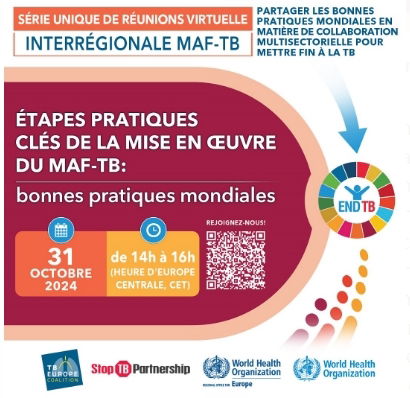
Join us on 31 October for a special interregional virtual meeting on “Key practical steps in implementing MAF-TB: global good practices”. This is the second in a unique series of interregional virtual meetings where high-level experts will share cutting-edge experiences on the adaptation and implementation of the WHO Multisectoral Accountability Framework for TB control (MAF-TB).
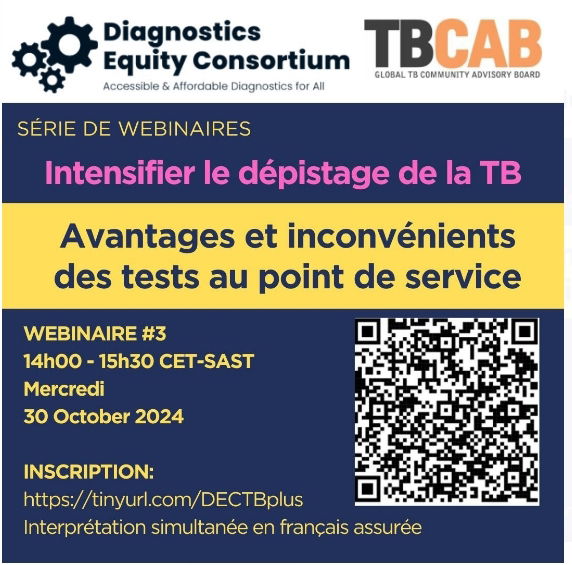
Join the Diagnostics Equity Consortium (DEC) and the Global TB Community Advisory Board (TB CAB) for the third session in a three-part online study series exploring the changing landscape of TB diagnostics and strategies to increase TB testing coverage.

Join us for a major webinar to mark World Antimicrobial Awareness Week (WAAW) 2024. Hosted by the Global Health Network AMR Knowledge Centre, University of Oxford, and featuring experts, policymakers and advocates discussing strategies to combat antimicrobial resistance (AMR). Join us to explore how knowledge and awareness can drive meaningful action against this urgent threat to global health. Topics include grassroots movements, innovative management approaches and the role of political leadership in fostering global resilience against AMR.

Join us for a webinar in celebration of World Antimicrobial Awareness Week (WAAW) 2024, hosted by The Global Health Network Nigeria, which will explore innovative solutions to address antimicrobial resistance (AMR) in Nigeria and beyond. Leading experts will discuss topics such as antimicrobial stewardship, infection prevention, and the role of oral health in reducing AMR. Don’t miss this opportunity to engage with thought leaders in the field and learn strategies to combat AMR in diverse healthcare settings.
We are pleased to invite you to an online workshop that will introduce the Public Health Ethics (PHE) Framework, a key component of EFBRI - An Evolving Ethical Framework Informing Breastfeeding Research and Interventions. The workshop will present several perspectives and case studies from international experts on its application.
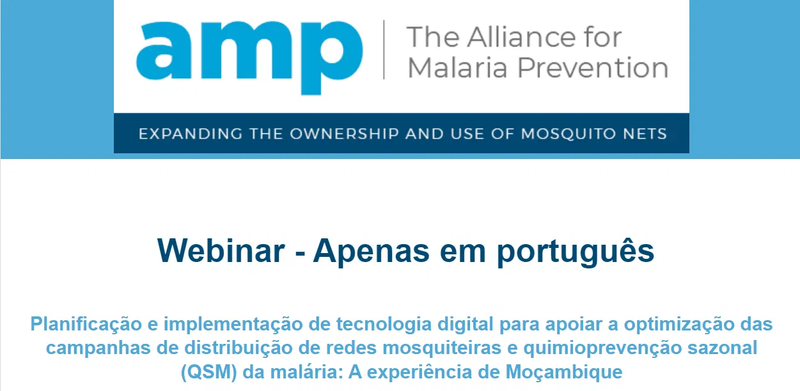
Join us for a webinar on the introduction, piloting, implementation, scaling and future thinking for the digitalization of the RTI and seasonal malaria chemoprevention campaign in Mozambique.
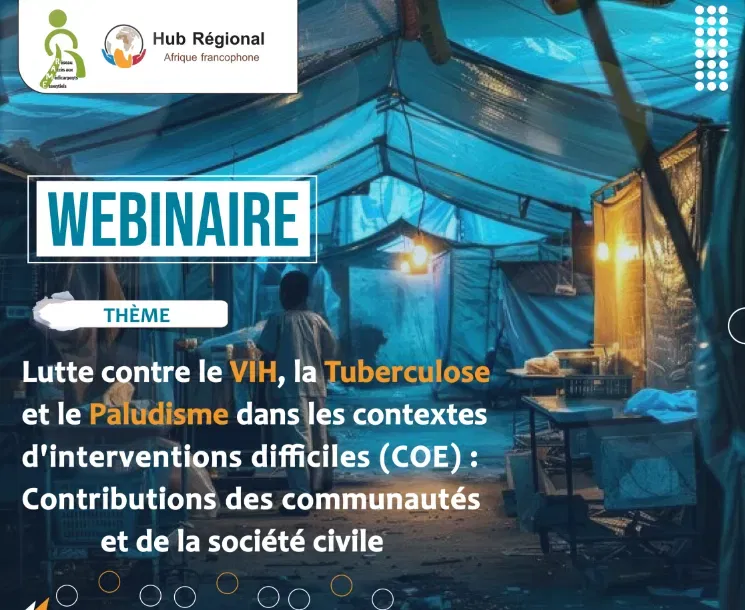
Dear Partners, to prevent HIV, tuberculosis and malaria from becoming public health threats and to address emerging threats to global health security, we need to provide prevention and treatment services to the most vulnerable people, wherever they are. This means focusing more on areas with challenging operational contexts (COEs), i.e. countries or regions facing infectious disease outbreaks, natural disasters, armed conflicts or civil unrest, poor governance, climate change crises and/or mass population displacement.
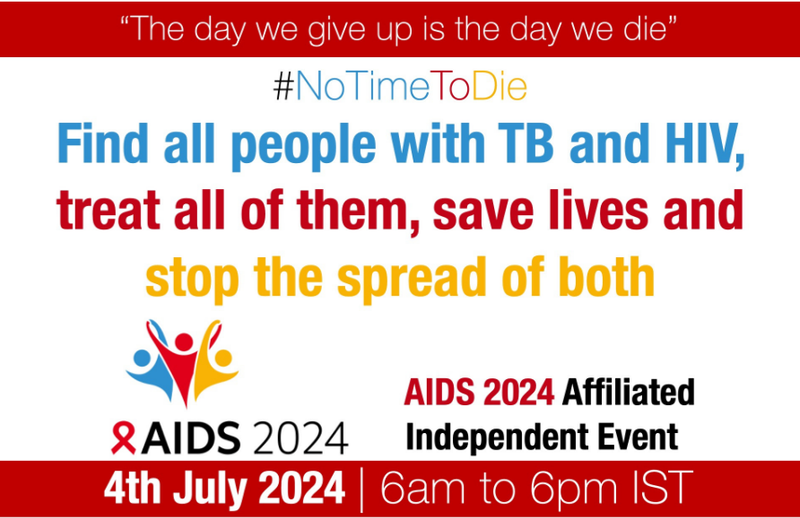
Even one death from TB or AIDS is one death too many. We have the tools to find every case of TB and HIV, treat them with effective medicines and prevent the transmission of both. Despite progress in the fight against TB and AIDS, we must recognise that we are also failing.
PUBLICATIONS
https://www.theglobalfund.org/en/
Malaria stratification is a fundamental approach that allows us to understand the geographic distribution and intensity of disease transmission, enabling the adoption of localized strategies targeted at the most vulnerable areas and populations. This Malaria Stratification Report for Guinea-Bissau, 2025 is therefore an important milestone in this effort.
Read MoreA matter of choice: People and possibilities in the age of AI. Artificial intelligence (AI) has taken off at a rapid and dizzying pace. Although AI advances attract attention, they prioritize technology in a vacuum of fiction, obscuring what really matters: people's choices.
Read MoreThe Global Fund is committed to transparency and accountability to demonstrate to stakeholders that it is making good use of the funds entrusted to it. Below are the audit, investigation and Board reports published by the Office of the Inspector General.
Read MoreThis study made it possible to identify the priorities of key populations with regard to HIV prevention and testing, and the strengthening of CSOs to respond to security threats within the scope of the multinational grant.
Read MoreThis document aims to present the latest edition of the National List of Essential Medicines (LNME) of Guinea-Bissau. September 2024
Read MoreThe results we have achieved over the past year build on an extraordinary record of progress: Since 2002, our partnership has reduced the combined death toll from AIDS, TB and malaria by 61%. In 2023, we will reach a new milestone on our journey to end HIV, TB and malaria as public health threats.
Read MoreThe Malaria Indicators Survey was carried out from October to November 2023. The National Malaria Control Program of the Ministry of Health of Guinea-Bissau, with the support of partners, namely the Global Fund to Fight Malaria, Tuberculosis and AIDS, has intensified malaria control actions by reinforcing strategies.
Read MoreCases of MPox (formerly known as Monkeypox) are currently accelerating in Central Africa and there is emerging evidence that the virus is mutating.
Read MoreStrong health and community systems and strong communities are the foundation of the fight against HIV, tuberculosis (TB) and malaria.
Read MoreOn 13 August 2024, the Africa CDC declared the Mpox outbreak a Public Health Emergency of Continental Security (PHECS). The following day, the WHO declared it a Public Health Emergency of International Concern (PHEIC).
Read MoreGlobal Fund Board Reaffirms Strong Commitment to Ending Epidemics Amid Growing Global Health Threats
The Council noted continued progress in the fight against AIDS, TB and malaria, but pointed to climate change, conflict and anti-LGBTQI+ legislation as dangers in the fight to end the three diseases. 12 May 2023
Read MoreCONTACT
- Bissau, Guinea-Bissau
- Street: Marien N'Gouabi S/N Bairro 24 Setembro, Annex to the Bissau Maternal and Child Center CP: 1068 – Codex Bissau
- +245-955361064 - Administration
- secretariado@ccmgb.com
- From Monday to Friday From 8:00 am to 4:00 pm
Our commitment is to the People of Guinea-Bissau Because together we can